
Dog Jumping
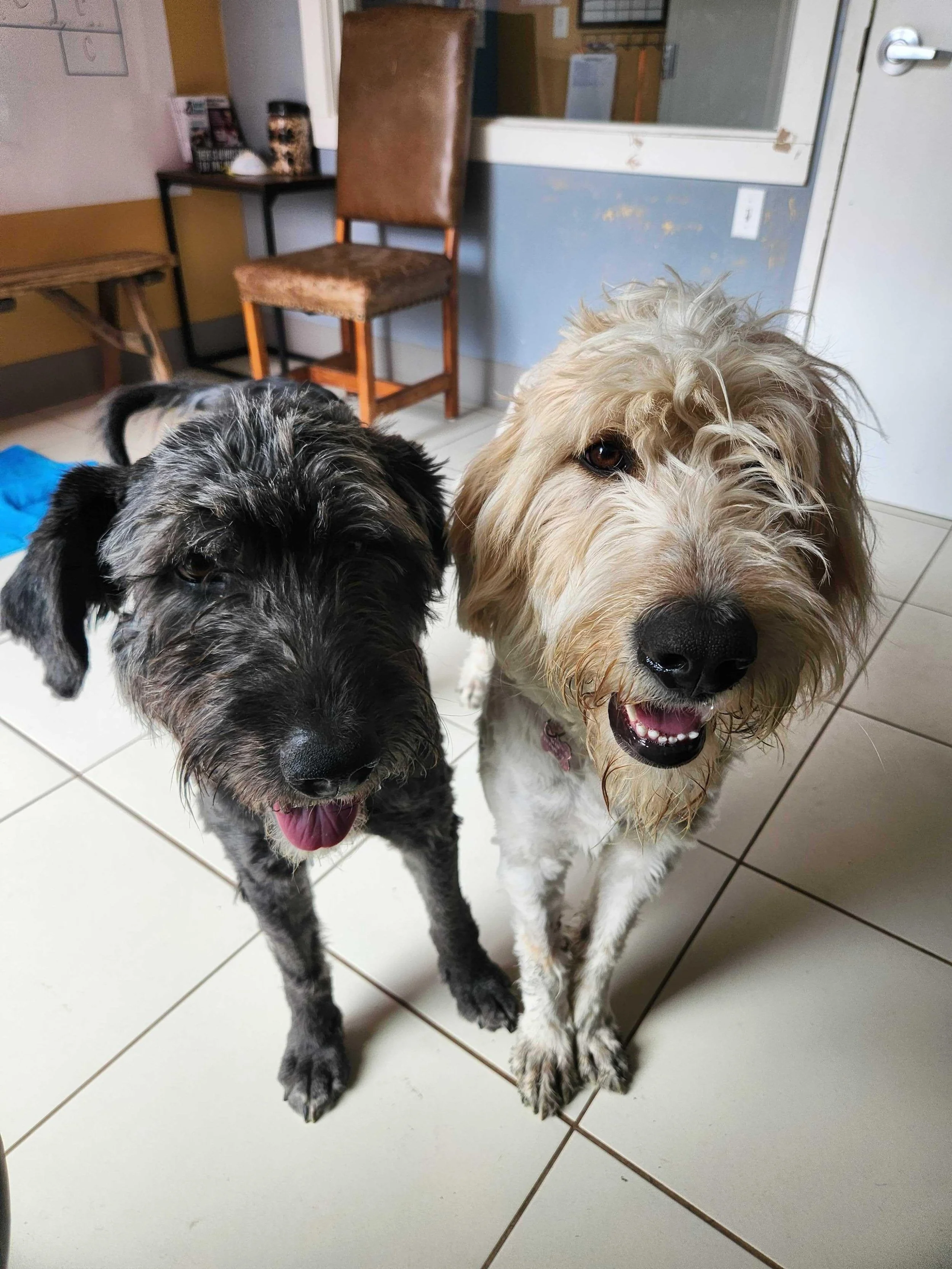
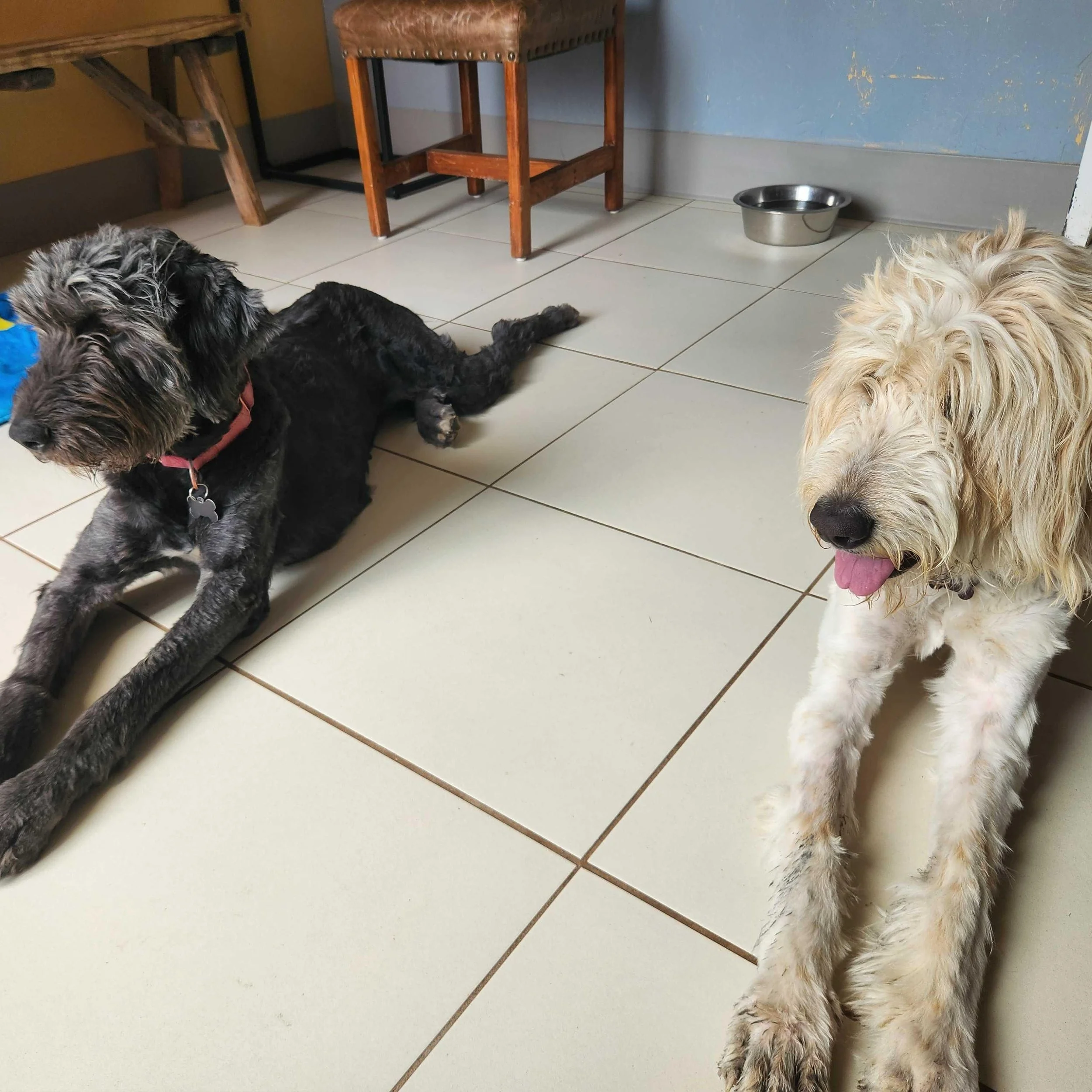
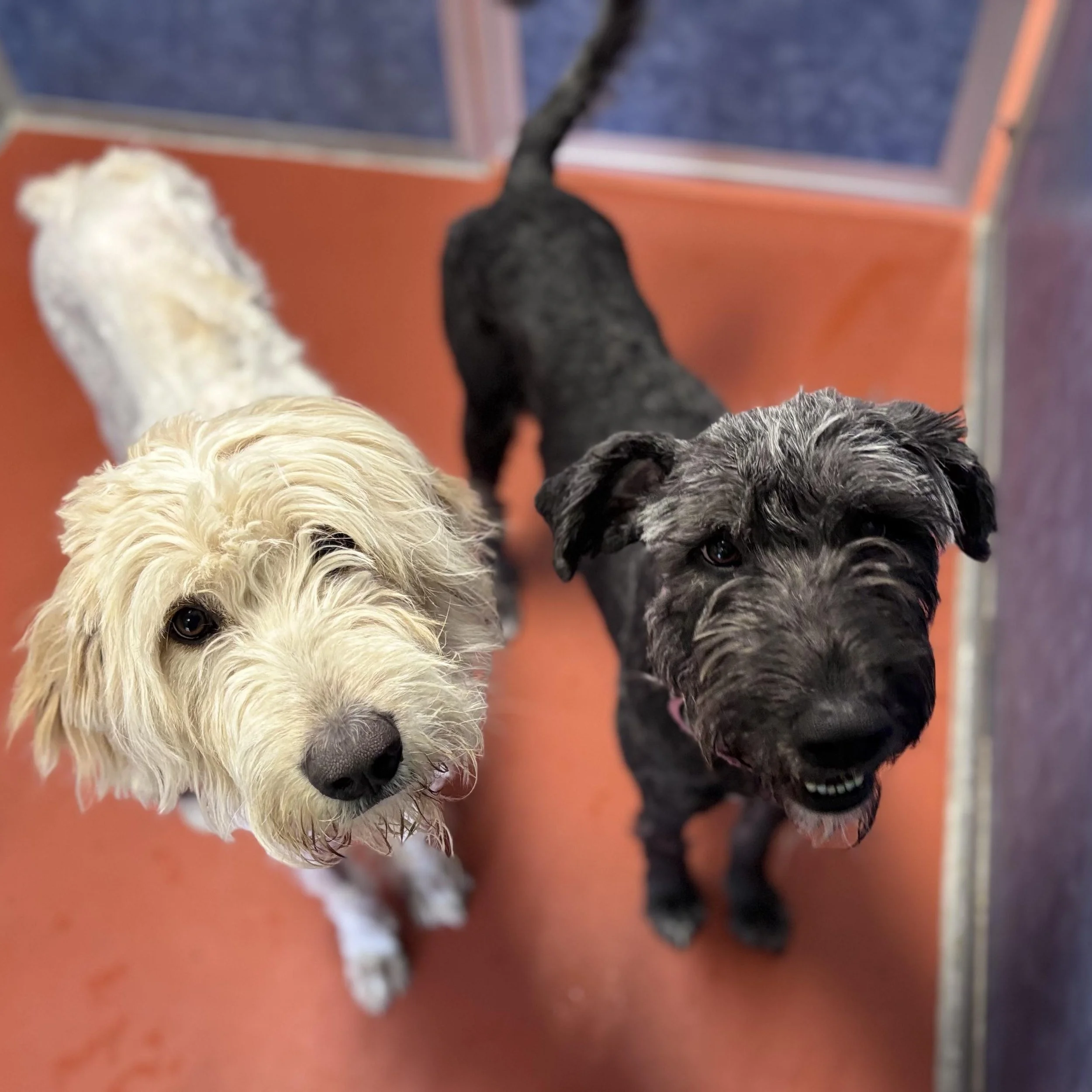
Some dogs seem to come with built-in springs in their legs. Even the littlest dogs can easily jump one to three times their shoulder height, while more athletic breeds can go even higher and farther. Our canine companions jump for all kinds of reasons, sometimes when we want them to, and often when we don’t. In this column, we’ll talk about how to discourage unwanted jumping while redirecting that energy into activities that have everyone jumping for joy.
A lot of the time, when a dog jumps on you, they’re simply trying to say "hi!" Many shelter dogs also develop jumping as a stress-related behavior. They don’t get as much attention as they’d like, so they become extra enthusiastic when someone comes by. The goal isn’t to punish the behavior– it’s to teach them a more polite way to ask for attention, such as sitting in front of you or simply keeping all four paws on the floor.
When a dog jumps on you, calmly turn away and give them no attention for the jumping. This includes negative attention. Saying "no," pushing the dog away, using a knee to block them, or other physical corrections still give them what they’re looking for: your attention. Instead, quietly turn away and wait for the jumping to stop. If it continues or becomes excessive, walk away and create some space. Once the dog is calm, ask for a sit. When they sit, reward them generously with attention and praise. Treats aren’t necessary here because you’re rewarding them with what they wanted most in the first place.
Sometimes dogs get frustrated when things don’t go the way they expect, so the behavior may actually get worse before it gets better. This is a normal part of learning. Consistency is the key. Everyone who interacts with the dog needs to respond the same way. If jumping is rewarded even occasionally, the dog learns that persistence pays off and may jump even harder next time, believing they just have to keep trying to earn the attention they want.
If your dog isn’t jumping on people but instead on counters and tables in search of food, congratulations, you have a counter surfer. Counter surfing is one of the toughest habits to break because it’s incredibly rewarding. From your dog’s perspective, there are all kinds of delicious treasures waiting to be discovered. Prevention is your best tool. Put food away immediately after cooking or eating, throw away wrappers promptly, wipe down counters to remove tempting smells, and block access to the kitchen when possible. Teaching impulse-control skills or a reliable mat stay ("place") can also help keep curious noses off the counters.
Of course, not all jumping is bad. Teaching your dog to jump onto appropriate elevated surfaces can be a great confidence-building exercise. Many dog sports– including agility, dock diving, flyball, and bite sports– encourage jumping in safe, structured ways. If your dog loves to jump, consider channeling that enthusiasm into an enriching activity you can enjoy together. With a little guidance, their favorite bad habit might just become their favorite healthy hobby.
Since 1994, the Animal Resource Center and the Shops of Second Chance Humane Society have been dedicated to serving animals in Southwestern Colorado. Our adoption hours are every day from 11 a.m. to 5:30 p.m. We are located at 177 County Rd 10, Ridgway, CO. You can view our shelter pets and services online at secondchancehumane.org.