
Desensitizing Bathtime
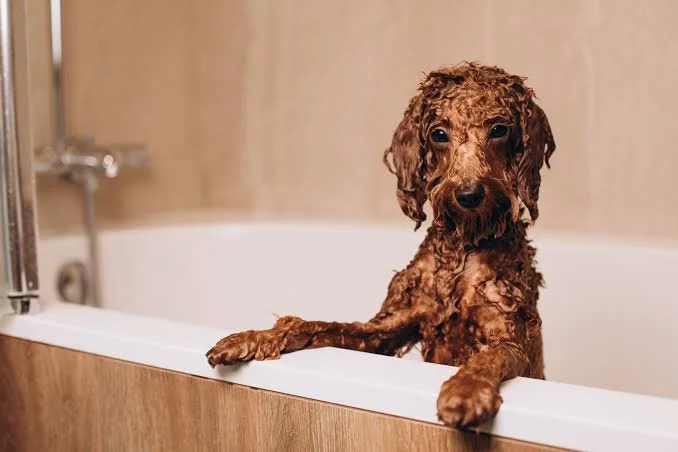
So your dog hates baths. Maybe it’s the bathtub that does it, or the sound of the showerhead, or just water in general, but something about bath time sends your pup over the edge and leaves you both frustrated and your bathroom a mess. Regular grooming is not only important to keep your house clean and your pup smelling fresh, but it also reduces shedding, allows you to familiarize yourself with your dog’s anatomy, and helps you identify injuries or insects like ticks that might otherwise get missed. But how do you bathe a dog who HATES baths?
The key to a successful bath starts long before the water ever turns on, especially for an anxious dog who already has negative associations with bathtime. Step one is to build positive relationships with all things ‘bath’. Reward your dog with high-value treats for going into the bathroom. If that’s already easy, reward them for taking treats from the edge of the tub. Then, for going inside the tub and standing still, but without turning on the water.
If your dog happily accepts treats while standing in the tub, you can then try turning the water on, but don’t let it touch your dog yet. This will help them get used to the noise without pushing too far. Then, let the water touch their toes. Eventually, your dog should be comfortable with getting their legs and belly wet.
Be careful with water temperature! Many professionals consider a dog’s tolerance to be closer to that of an infant. If it is too hot or cold for you, it is definitely too much for your dog.
Finally, add the shampoo and rinse phase of the bath. Do all of this over multiple short sessions, with lots of high-value rewards and praise, to build a positive association with the experience. If your dog gets stressed, stop and go back a few steps. Don’t move too quickly or expect too much! You’re teaching your pup that baths are fun, not scary.
Playtime before and after a bath can make the experience seem more fun, too. It slows the whole thing down, so there’s less rush, less chaos, and overall less stress for you and your dog! A lot of the time, you want the bath to be over as much as your dog does, and they pick up on that. Take a deep breath and make an event of it.
If you cannot get your dog through these phases, no matter how slowly you progress, consider reaching out to a veterinarian or behaviorist. Your dog may be suffering from anxiety or trauma that requires more serious attention.
How often you should bathe your dog depends on breed, lifestyle, and circumstance. If a particularly nosy pup enjoys rolling in every stinky substance he can find, he might need a bath more often than the senior dog who spends her days lazing on the couch. Many double-coated breeds have important oils in their fur, and overbathing can strip them of these oils. Most dogs are content with being bathed every 4 to 6 weeks, but when in doubt, always consult with your vet.
Since 1994, the Animal Resource Center and the Shops of Second Chance Humane Society have been dedicated to serving animals in Southwestern Colorado. Our adoption hours are every day from 11 a.m. to 5:00 p.m. We are located at 177 County Rd 10, Ridgway, CO. You can view our shelter pets and services online at secondchancehumane.org.